Granada, "la Gran Sultana"
It was named after the Ancient Spanish city of Granada by Hernández de Córdoba. This was done in honor of the defeat of the last Moorish stronghold, which had been Spanish Granada, by the Catholic King and Queen of Spain. Granada, Nicaragua was historically the sister capital in Central America to Antigua, Guatemala. During the colonial period, Granada maintained a flourishing level of commerce with ports on the Atlantic, through Lake Nicaragua (Cocibolca) and the San Juan River.
The city has been witness and victim to many of the battles with and invasions from English, French and Dutch pirates trying to take control of Nicaragua.
It was also where William Walker, the American filibuster, took up residence and attempted to take control of Central America as a ruling monarch. One of Walker's generals, Charles Frederick Henningsen, set the city ablaze before escaping, destroying much of the ancient city and leaving printed the words "Granada Was Here".
For many years Granada disputed with León its hegemony as the major city of Nicaragua. The city of Granada was favored by the Conservatives, while Léon was favored by the Liberals. For many years there was conflict that at times became quite violent between the cities' families and political factions. In the mid 1800s a compromise site was agreed on and the capital was finally established in between both cities at Managua.
For the most part Granada avoided damage during the years of conflict in Nicaragua in the 1980s.
Interesting sites

There are 6 main churches : the Cathedral, La Merced, Guadalupe, Xalteva, San Francisco and María Auxiliadora, which all have interesting historical backgrounds and are in very different states.
Fuerte La Polvora is an 18th century fort (built in 1748) that's open for tours. A few historical exhibits are available on the main level, you can climb the towers for views of the quiet city streets, or wander through the lovely courtyard.
Lake Cocibolca (also known as Lake Nicaragua), is the 10th largest fresh-water lake on earth and is inhabited by Bull Sharks, informally named the Nicaragua Shark.
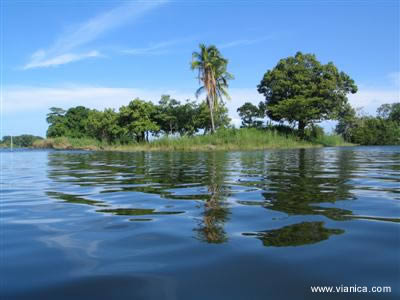
The beach area is not the safest area in town, it is advised tourist avoid this area at night. However, during the day this is a nice place to catch a breeze, and there are many Nicaraguan families that come here to pass the time. Vendors pass selling all kinds of food. Tours of the islands are available from Puerto Asese, near the pleasant Asese restaurant (known for its boneless fish).
 The local market is definitely worth a glimpse, it's chaotic little market stands where you can get a lmost everything. The market is open everyday except holidays around and in the old Market hall, you can't miss it.
The Central Park with the Cathedral and the Colonial houses surrounding it. The lively center of town with a lot of handicrafts or snacks to buy, or just sit down at a bench and watch the city and its people.

The streets themselves with their charming Colonial colored houses are always worth a wander themselves.
Take a boat tour of the Isletas. Boats leave from the marina at Puerto Asese. Your guide will tell you how all the islands are owned by millionaires. You will even visit an old fort that is on the island. Not to mention you will see adorable monkeys that live in the tree.

Granada, Nicaragua - History and places to visit